
Haute Couture outfit’s secrets · Chapter 34
Carnaval à Rome
Audrey Fleurot’s fairy dress · The Countess of Monte Cristo
Maison Julien Fournié · Haute Couture
In The Countess of Monte Cristo (La Comtesse de Monte-Cristo), the eight-part miniseries broadcast on French channel TF1 since 16 November 2026, Audrey Fleurot plays Mercédès Herrera in two creations by Julien Fournié Haute Couture reinvented for the screen: the black mind-palace dress from the First Oracle collection, seen from the second episode, and the violet Carnaval à Rome gown, which the actress calls her “fairy dress”, revealed in the third episode, broadcast on Monday 23 November. In an exclusive interview with the Audrey Fleurot Source account, the couturier shares their secrets.
At a glance
The series
TF1, Mondays at 9.10 pm, two episodes a night
The black dress
First Oracle, seen in episode 2
Carnaval à Rome
In episode 3, broadcast on 23 November
From the runway to the set
Carnaval à Rome, a jellyfish dress turned fairy dress
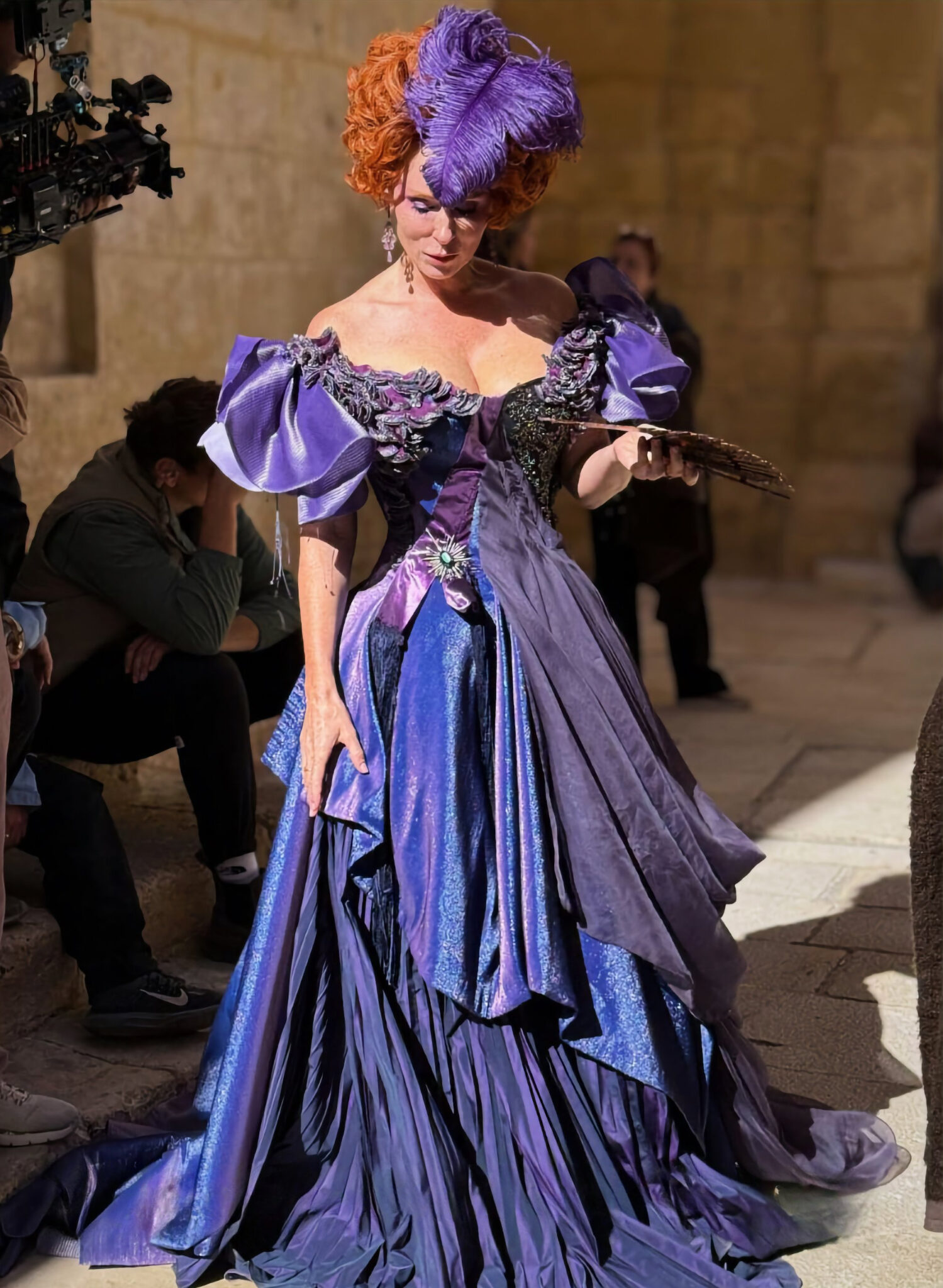
Audrey Fleurot in the Carnaval à Rome gown

Mercédès Herrera at the carnival in Rome
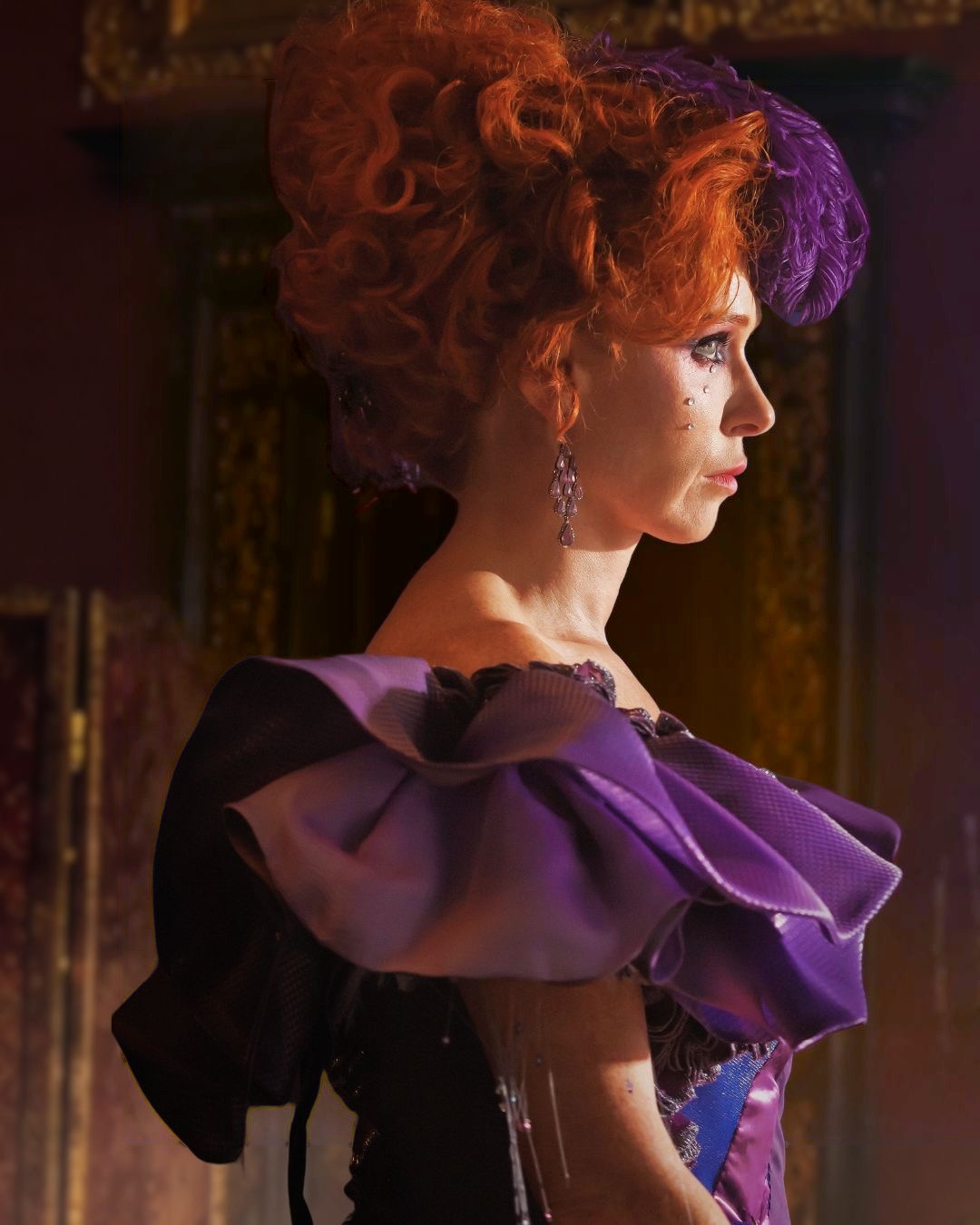
For the carnival in Rome, which viewers discover in the third episode, broadcast on 23 November 2026, Julien Fournié first suggested an emerald green dress. As Mercédès already wore that colour at other moments in the series, he chose violet, a shade he loves and has worked with for a long time. The starting point was a jellyfish dress from his First Spell – Premier Sortilège collection, entirely transformed by Julien Fournié in collaboration with costume designer Marie Frémont: volumes, flounces and silhouette were reworked by the Maison’s Ateliers, before Audrey Fleurot’s fittings in Paris.
The work
3 and a half months, 6 people in the atelier
The fabrics
35 m of organza, 12 m of aurora Lurex on silk
The line
Wasp waist, 65 cm with the corset closed
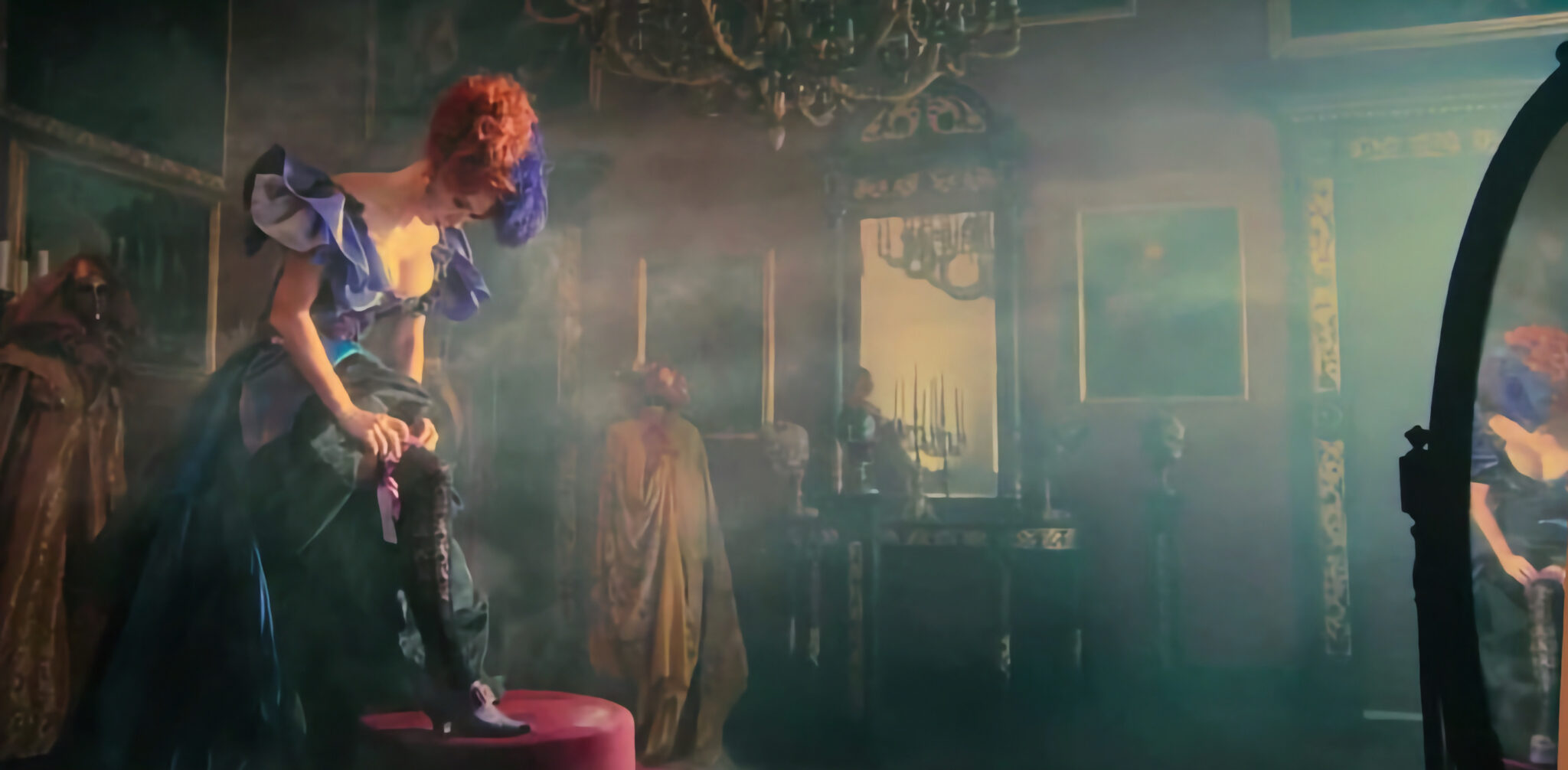
When she moves,
the dress ripples and catches the light.
Thousands of crystals mounted on stems
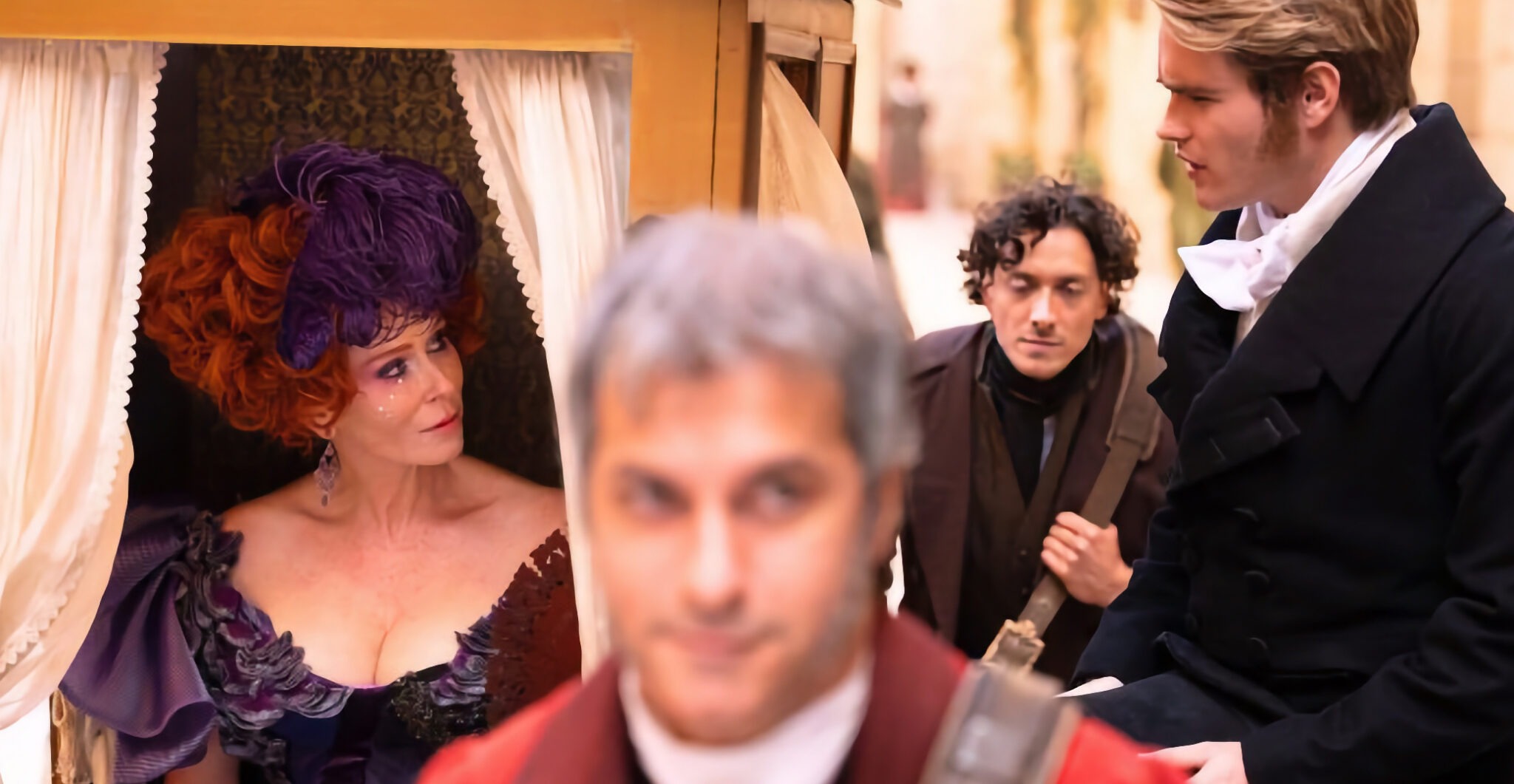
Silks, lace & crystals
The fabrics of a Haute Couture dress in motion
Silk organzas, ombré silk chiffons, silk failles, silk velvet ribbons and vintage lace make up the dress. Thousands of crystals were mounted on small stems so that they move with it. From the original jellyfish dress, it keeps its cut and frayed fabrics. Lola Castanié, an apprentice at the atelier, worked in particular on the corsets and drapes. The corset, laced at the back, shapes a 65 cm wasp waist.
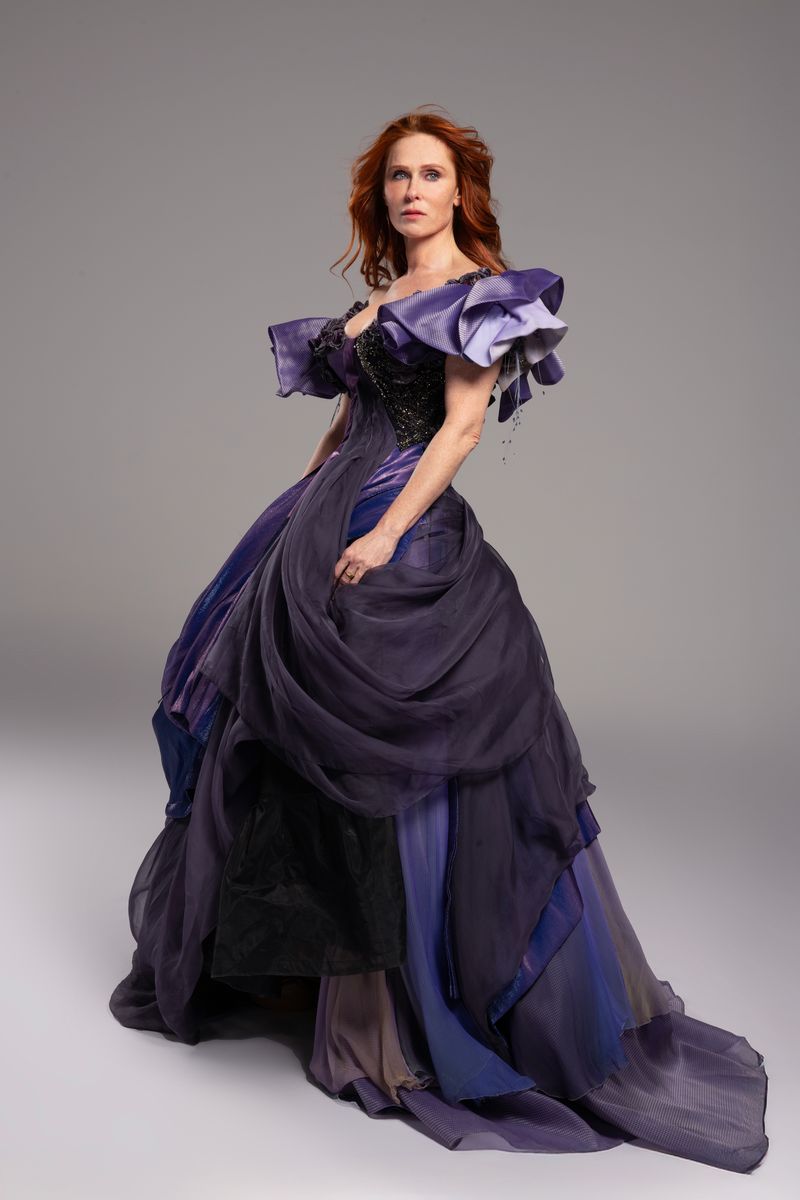
Audrey Fleurot in Mercédès Herrera’s fairy dress
© Thomas Braut / TF1
Julien Fournié
The couturier’s words
Audrey is a friend; she often tells me about her projects. When she told me about The Countess of Monte Cristo, I put my hand up straight away. For once, I wanted to put myself at the service of a story, under the direction of a great film costume designer, Marie Frémont. We both studied at the École de la Chambre syndicale de la couture parisienne: we speak the same language.
The fairy. There is a nod to Donkey Skin (Peau d’âne) in the volumes, the crinolines, the flounces. I adore the Lilac Fairy, the godmother dressed in violet played by Delphine Seyrig in Jacques Demy’s film, who helps the princess escape the marriage her father wants to force on her. A strong, colourful character, just like Mercédès.
The jewel that was removed. An ex-voto was meant to sit at the centre of the bodice. Everything around it had been embroidered, and in the end the jewel was taken off. That is cinema too: you imagine a piece in the atelier, and the teams can still adapt it, transform it or take a detail away so that the whole works on screen.
The corset. I wanted to recapture the wasp waist of Christian Lacroix or Thierry Mugler. It is a real Haute Couture corset: even with Audrey’s measurements, you breathe less freely in it than in everyday clothes. It is laced at the back so that it can be loosened between takes.
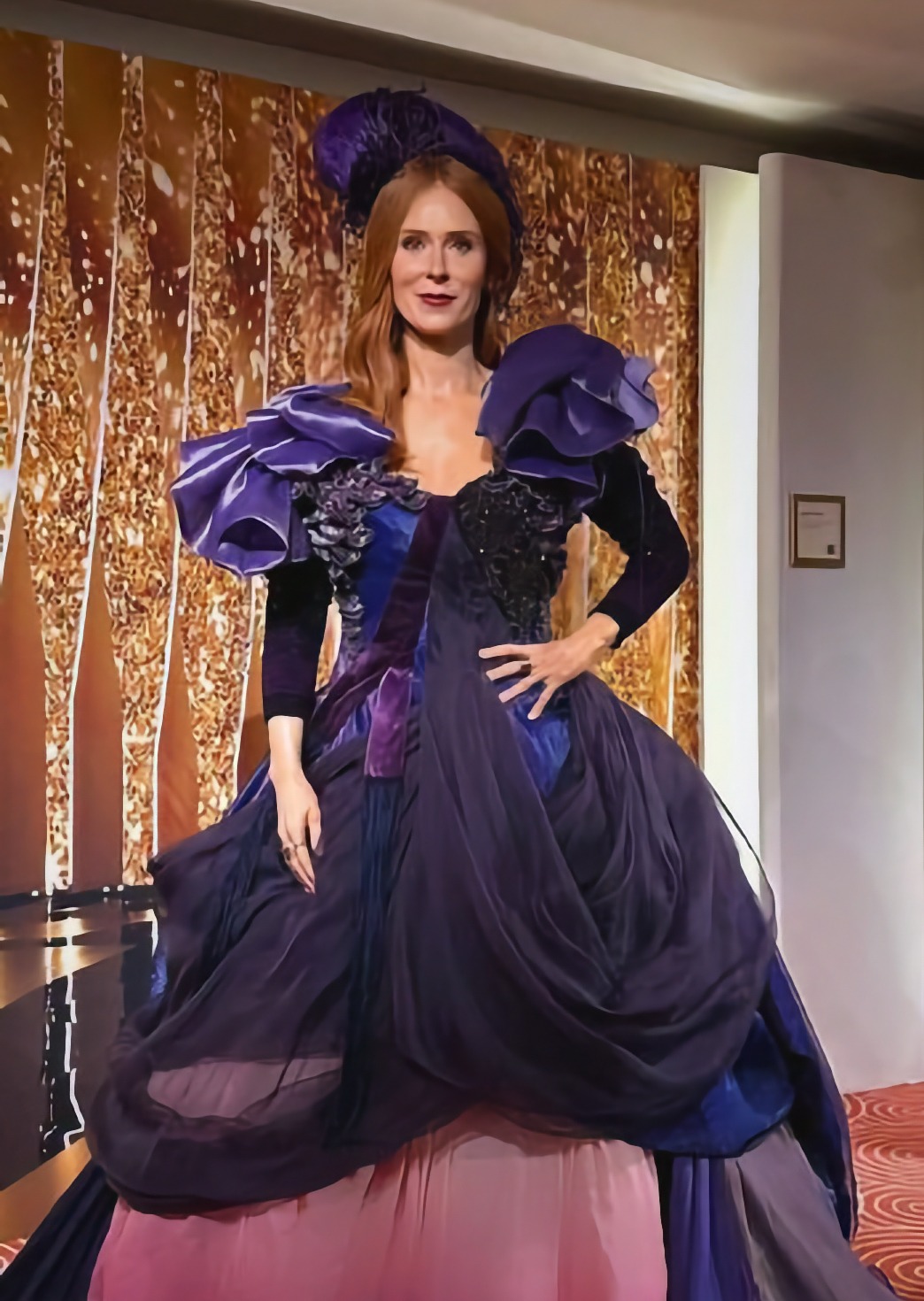
Audrey Fleurot’s wax figure in the Carnaval à Rome gown
Musée Grévin
Carnaval à Rome dresses Audrey Fleurot’s wax figure
Audrey Fleurot’s wax figure, unveiled at the Musée Grévin in Paris in March 2023 in the couturier’s presence, was already wearing a creation by the Maison: a teal silk sheath dress from the First Squad collection. It now wears the Carnaval à Rome gown for as long as the series is on air. For the occasion, the dress was refreshed after a shoot full of outdoor scenes; the atelier gave it back its original pink petticoat, removed for filming, and added sleeves to cover the figure’s arms.
The mind palace · First Oracle
Audrey Fleurot’s black mind-palace dress, a black that absorbs light
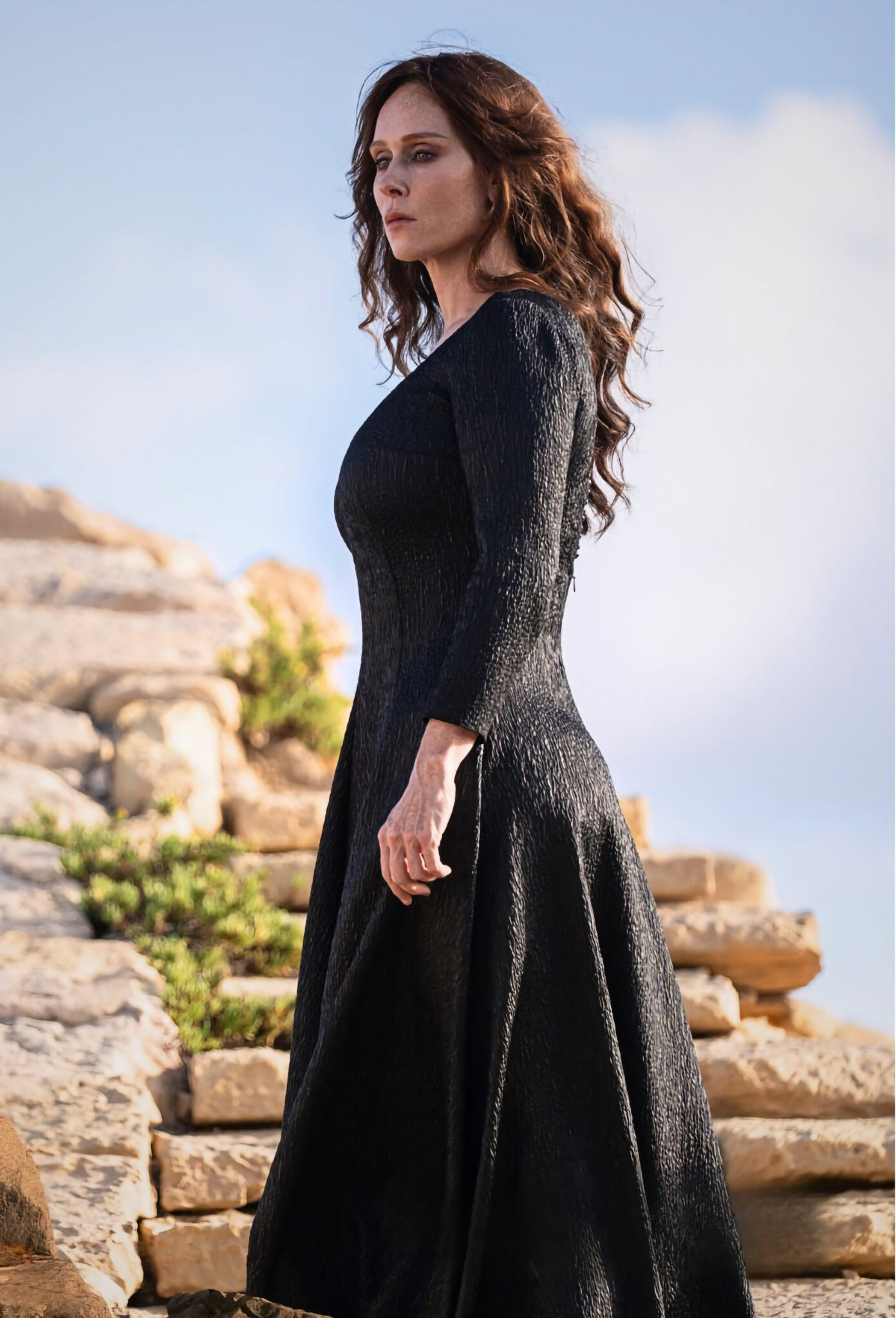
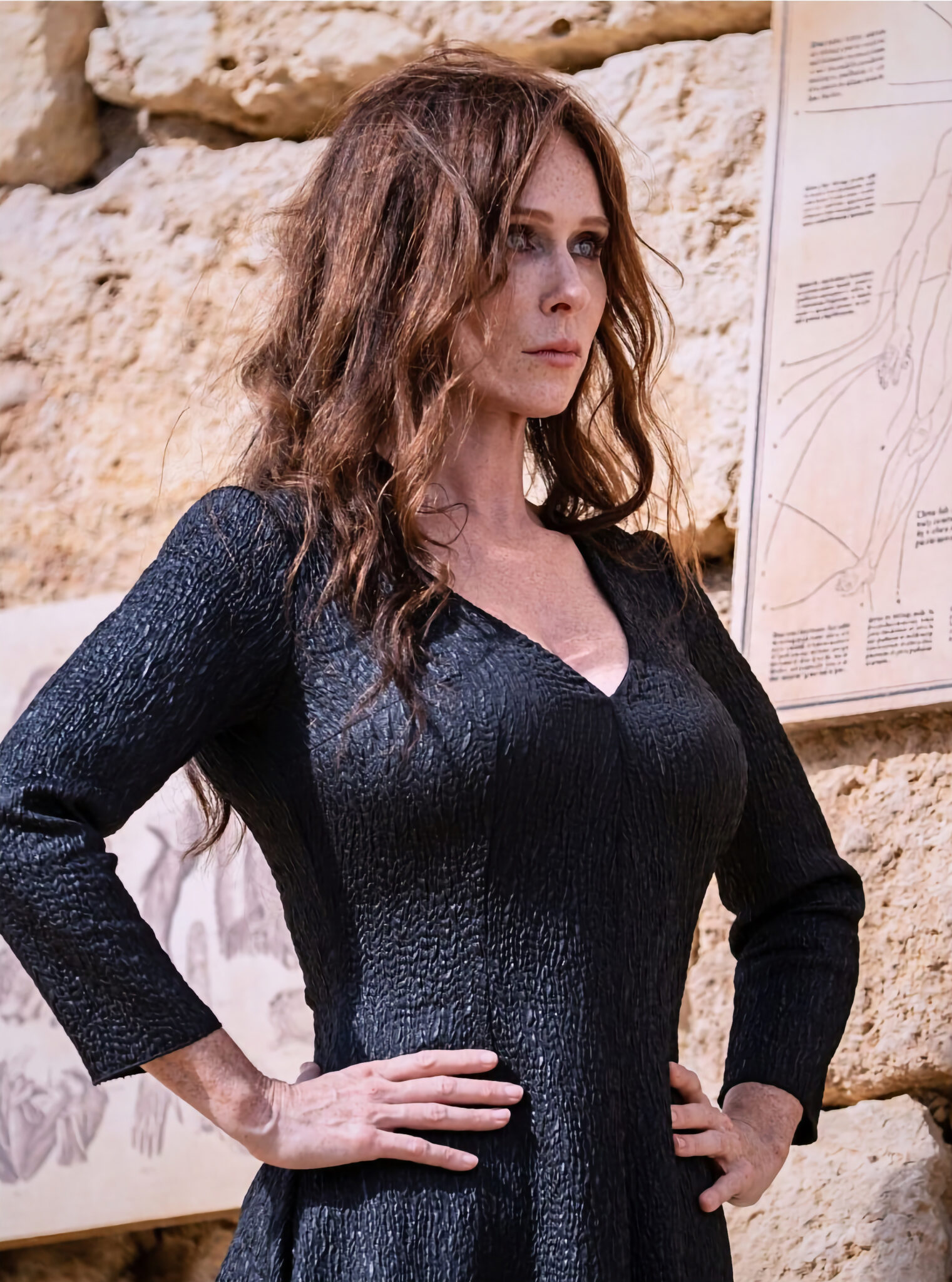
Audrey Fleurot wears the black dress from the second episode of the series. Created some ten years ago for the First Oracle collection, it was pared back for the occasion: the lace was removed at the front to open the neckline, the lace band across the upper back gave way to a simpler band, and the scarf decorated with floral motifs and spirals disappeared, so that cut and fabric would be enough. That fabric is a stretch cloqué jersey, developed with a French manufacturer by a couturier fascinated by black holes and their ability to absorb light: under a spotlight, the dress stays black and matt. The jersey follows the body without stiffness and the cut follows its lines, which makes Audrey Fleurot look immense on the stone staircase of the mind palace. Unlined, the dress even travelled in a small suitcase; the violet gown only fitted into a giant cabin trunk.
Order a Haute Couture dress
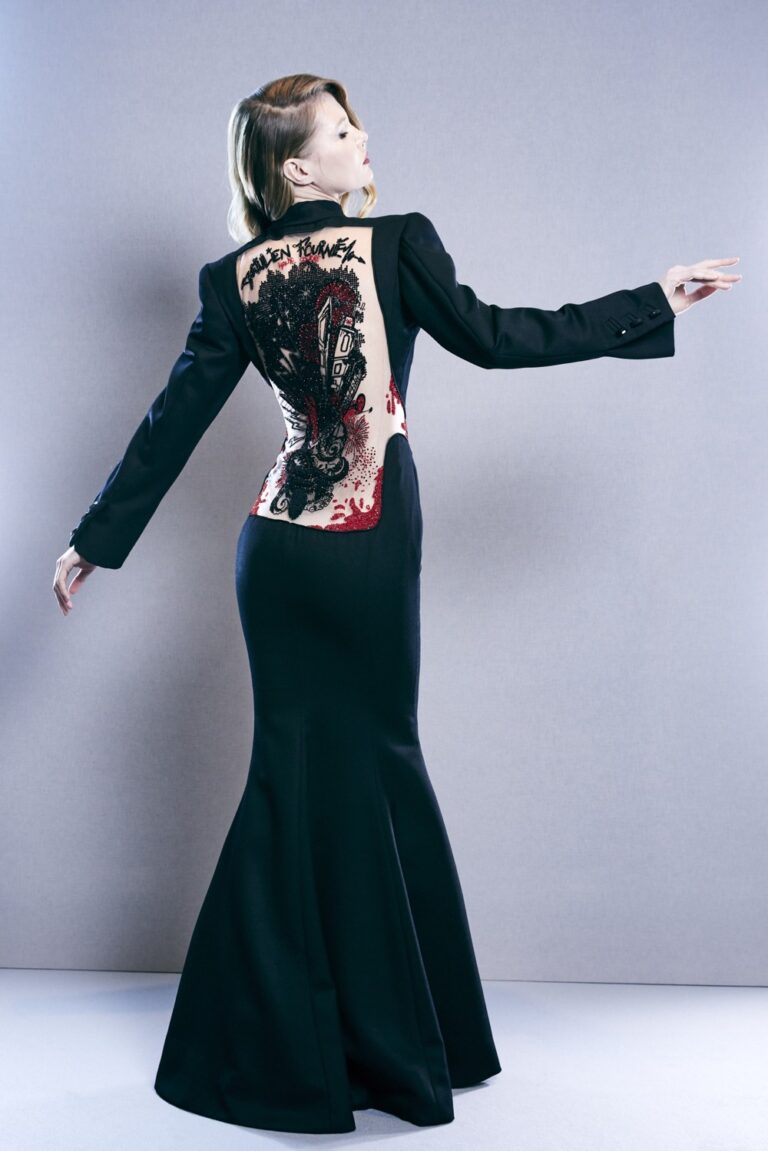
Both dresses worn by Audrey Fleurot in The Countess of Monte Cristo were born in the ateliers of Maison Julien Fournié, founded in Paris in 2009 and holder since 2017 of the official Haute Couture designation, reserved for around a dozen houses worldwide. Every Haute Couture dress is made to measure, by appointment, in the Maison’s Paris showroom. In the same series: The Tattooed Sheath Gown (chapter 33) and La Gitane (chapter 32).
Audrey Fleurot has worn the Maison’s creations for more than ten years. See also the celebrities dressed by Julien Fournié and the TAAF stamp designed by the couturier, in the same violet hues as his gowns.
Frequently asked questions
Who designed Audrey Fleurot’s dresses in The Countess of Monte Cristo?
The couturier Julien Fournié reinvented two of his Haute Couture creations for Mercédès Herrera, the character played by Audrey Fleurot: the black mind-palace dress from the First Oracle collection, and the violet Carnaval à Rome gown, nicknamed the “fairy dress”, based on a jellyfish dress from the First Spell – Premier Sortilège collection. He transformed them in collaboration with the series’ costume designer, Marie Frémont.
Why is the Carnaval à Rome gown called a “fairy dress”?
It is the nickname Audrey Fleurot gave it; it is her favourite dress in the series. Julien Fournié included a nod to Jacques Demy’s Donkey Skin (Peau d’âne) in its volumes, crinolines and flounces, and to the Lilac Fairy, the godmother dressed in violet played by Delphine Seyrig.
How was the Carnaval à Rome gown made?
It took six people in the atelier three and a half months. It combines 35 metres of organza, 12 metres of aurora Lurex on silk, ombré silk chiffons, silk failles, silk velvet ribbons, vintage lace and thousands of crystals mounted on stems. Its corset, laced at the back, measures 65 cm around the waist when closed.
Where can you see the Carnaval à Rome gown?
At the Musée Grévin in Paris: Audrey Fleurot’s wax figure wears the Carnaval à Rome gown for as long as the series is on air. For the occasion, the atelier gave it back its original pink petticoat and added sleeves.
In which episodes of The Countess of Monte Cristo can you see Julien Fournié’s dresses?
The black mind-palace dress appears from the second episode, broadcast on 16 November 2026. The Carnaval à Rome gown appears in the third episode, broadcast on Monday 23 November 2026.
Where can you watch The Countess of Monte Cristo?
In France, on TF1, on Mondays at 9.10 pm, with two episodes a night since 16 November 2026. The miniseries has eight episodes; it is also available to stream on TF1+ and Netflix.
What fabric is the black mind-palace dress made of?
Stretch cloqué jersey, developed by Julien Fournié with a French manufacturer. Inspired by black holes, this fabric absorbs light: even under a spotlight, the dress stays black and matt. The jersey follows the body without stiffness, which lengthens the silhouette.
Can you order a Julien Fournié Haute Couture dress?
Yes. Maison Julien Fournié’s creations are ordered by appointment, in its Paris showroom. The price of a Haute Couture dress is given once a quote has been drawn up; the lead time ranges from three weeks to six months depending on the complexity of the piece, and making it requires at least three fittings.

Bags and accessories
Bags and accessories born from haute couture. Pure, unapologetic design. Shop the collection.

More than a fashion brand, Maison Julien Fournié is a luxury experience that transcends trends and seasons. Driven by a commitment to excellence and innovation, Julien Fournié continuously redefines the world of ultra-luxury.
Founded in 2009, the house’s history is woven into its haute couture collections, presented in Paris every January and July during Haute Couture Week. For his debut collection, the young couturier was awarded the Grand Prize for Creativity by the City of Paris in January 2010. By his fourth collection in January 2011, Julien Fournié became a guest member of the official calendar of the Chambre Syndicale de la Haute Couture — a first step towards recognition among the great couturiers.
In January 2017, Maison Julien Fournié was officially classified as Haute Couture. This prestigious label, protected by the French Ministry of Industry, is held by only a handful of houses — currently ten — that unite the highest creativity in design with the finest standards of garment making.
Since its inception, the house has been invited to present its collections at prestigious events worldwide, bringing the couturier’s vision to luxury clients across the globe. In March 2023, a Julien Fournié gown worn by actress Audrey Fleurot entered the Musée Grévin in Paris. In April 2023, the first retrospective of Julien Fournié’s work was held at SCAD Lacoste, in an exhibition entitled Haute Couture, un point c’est tout.
While honouring tradition, Julien Fournié has forged bold partnerships with high-tech leaders such as Apple and Tencent, digitising the creation, design and personalisation of his haute couture pieces. He stands among the rare couturiers to fully master the new digital tools. Clients are no longer mere spectators of the creative process — they have become active participants in the singular experience of creating a garment, wherever they may be.
Since December 2020, Julien Fournié has been developing a line of luxury bags and accessories, initially conceived to offer the iconic pieces seen on the runway — previously reserved for haute couture clients — to a wider audience.