

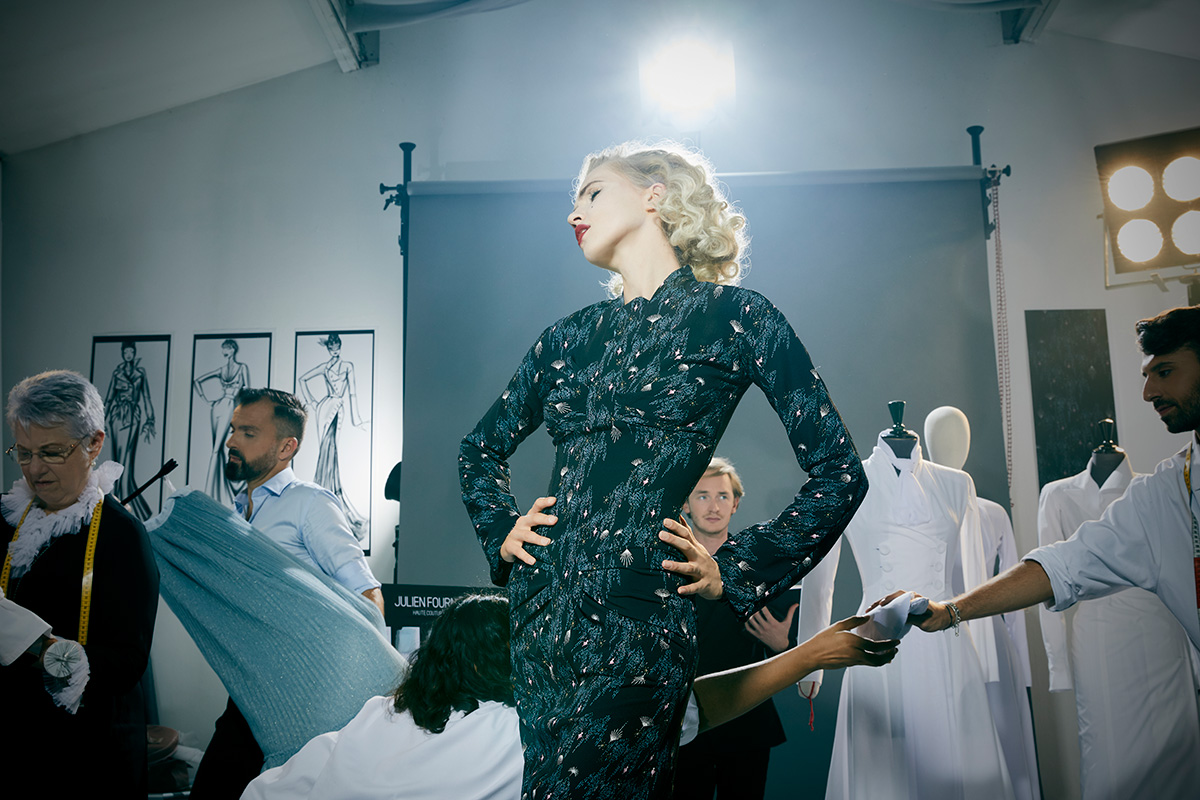
How a haute couture dress is made: a haute couture gown is born in 7 steps — the sketch, the choice of fabrics, the toile (cotton prototype), hand cutting and assembly, embroidery, made-to-measure fittings and the final reveal. Creating one requires from 100 to several thousand hours of work in the Maison’s Paris atelier, depending on the complexity of the embroidery. Two or three fittings are needed for a gown to fit the client perfectly. Far from fast fashion and its relentless pace — and even from luxury ready-to-wear with its standardised seasons — haute couture cultivates a different relationship with time. Here, nothing is mass-produced, nothing is decided in a rush. Every gown is born of a dialogue — between a sketch and a hand, between a cloth and a body — that allows no shortcut. This time is not a cost; it is the very material of the work. It can be read in the precision of a drape, in the exact fall of a sleeve, in those invisible details that only patience can achieve. At a time when clothing is consumed and discarded, haute couture reminds us that it can still be handed down. It does not dress the moment: it travels through time.
The 7 Steps in the Birth of a Haute Couture Dress
Step into Julien Fournié’s Paris atelier and follow the 7 steps of creating a haute couture gown — from sketch to reveal. Meticulous fabric selection, the prototype toile, precise cutting, exceptional embroidery and made-to-measure fittings: every gesture turns a drawing into a unique piece.
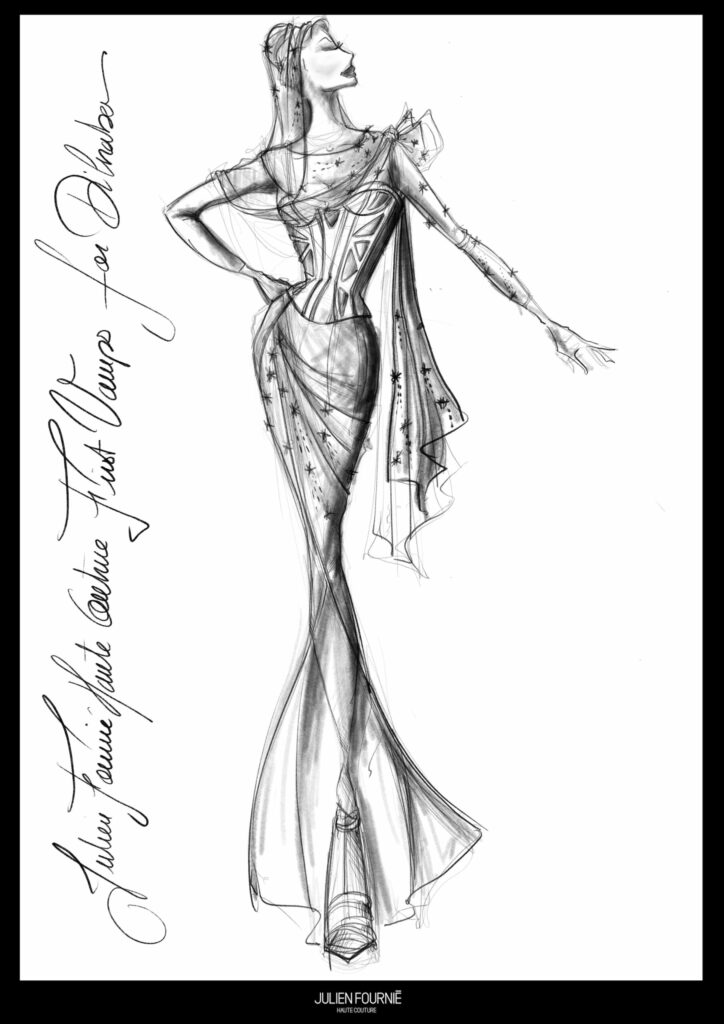
1. Inspiration and the sketch
It all begins in Julien Fournié’s Paris atelier, where an idea takes shape. A sketch drawn by hand on his iPad translates his artistic vision: a silhouette, an attitude, an emotion. This is the moment when imagination crystallises into lines and volumes.
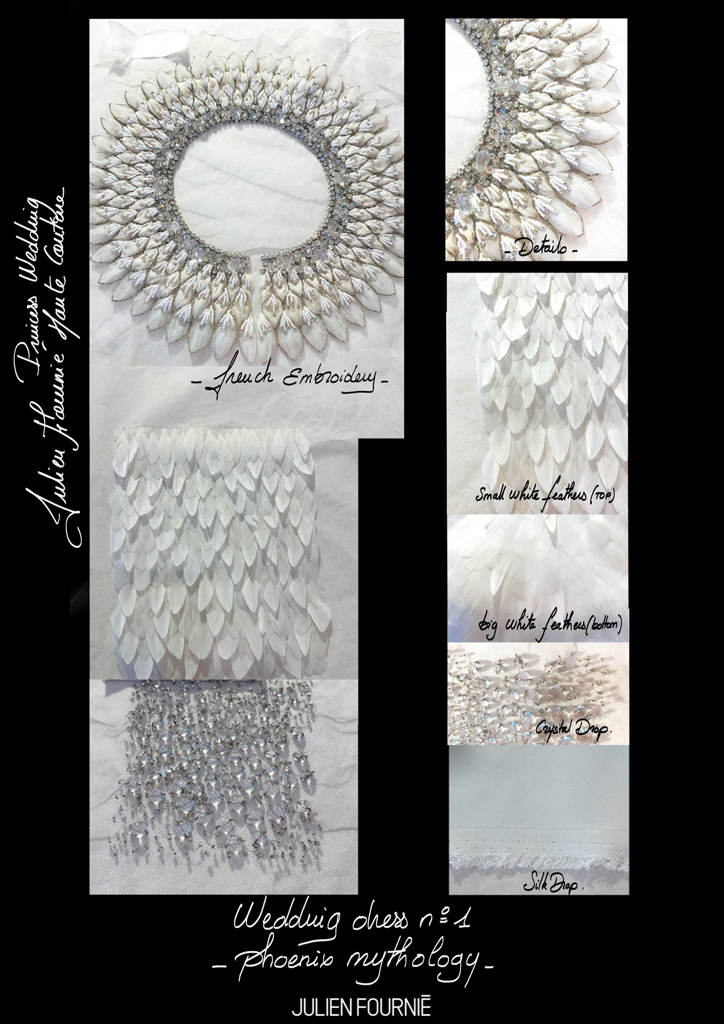
2. Choosing the fabrics
The fabrics are selected by the couturier with absolute rigour: precious silks, airy chiffons, brocades, laces, jacquards and illusion tulles. Each cloth is chosen with the client by Julien Fournié for its texture, its light and its ability to bring the sketch to life.
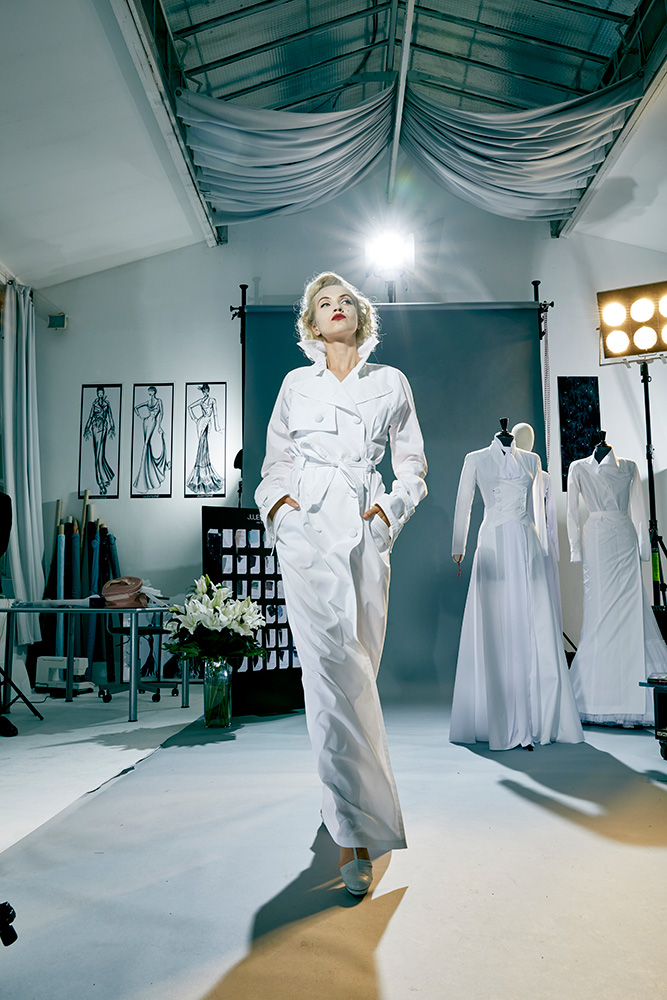
3. The toile (the cotton prototype)
Before touching the final fabric, the Maison’s petites mains create a cotton toile. This prototype is used to adjust proportions, test volumes and perfect the cut. It is a stage of research and precision.
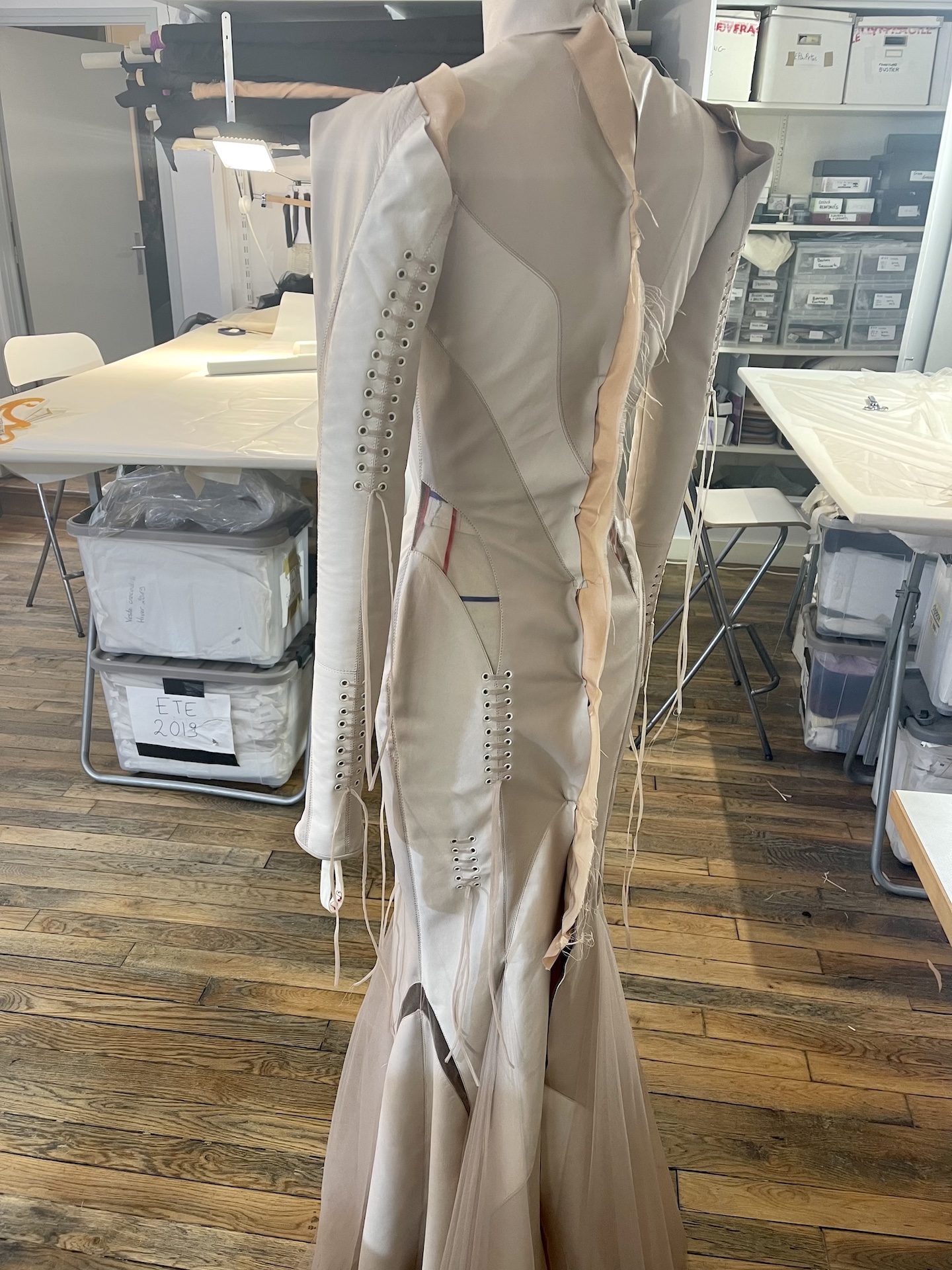
4. Cutting and assembly
The final fabric is cut by hand, piece by piece, following the pattern approved by Julien Fournié. Assembly begins, often with long basting stitches, to check the drape and the flow. Every gesture is measured; every millimetre counts.
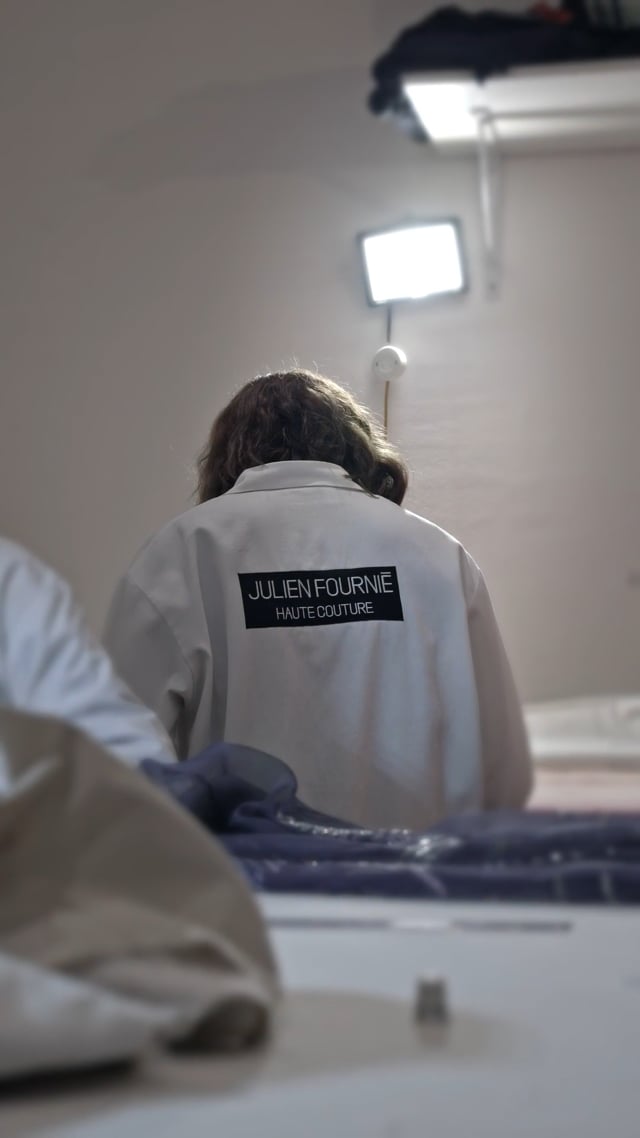
5. Embroidery and ornamentation
Next comes ornamentation: beads, crystals, feathers, gold or silver thread. The embroiderers sometimes work hundreds of hours on a single panel of fabric. These details transform the gown into a work of art.
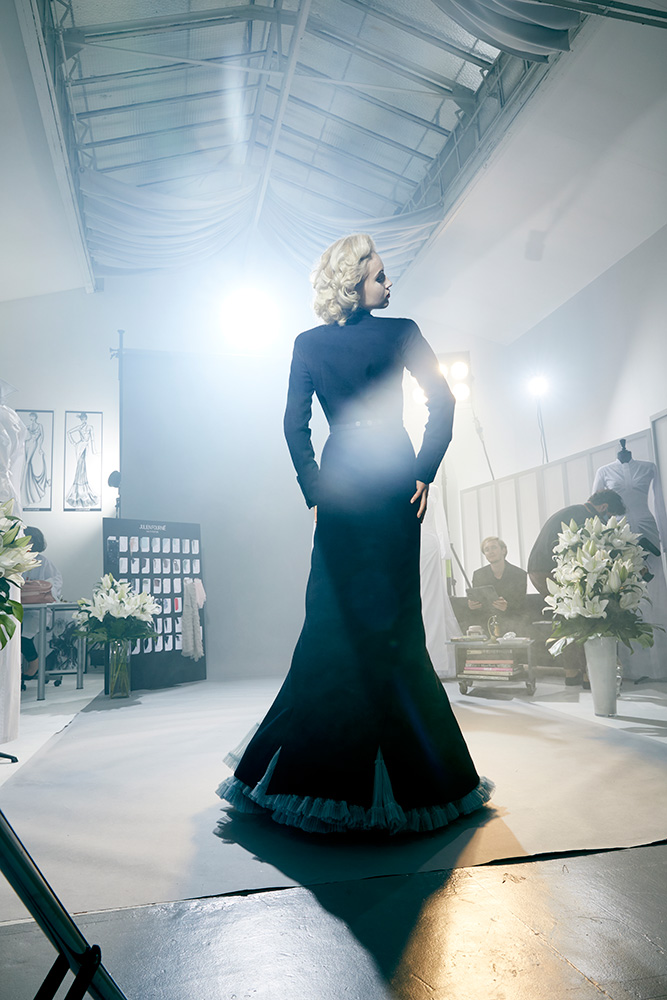
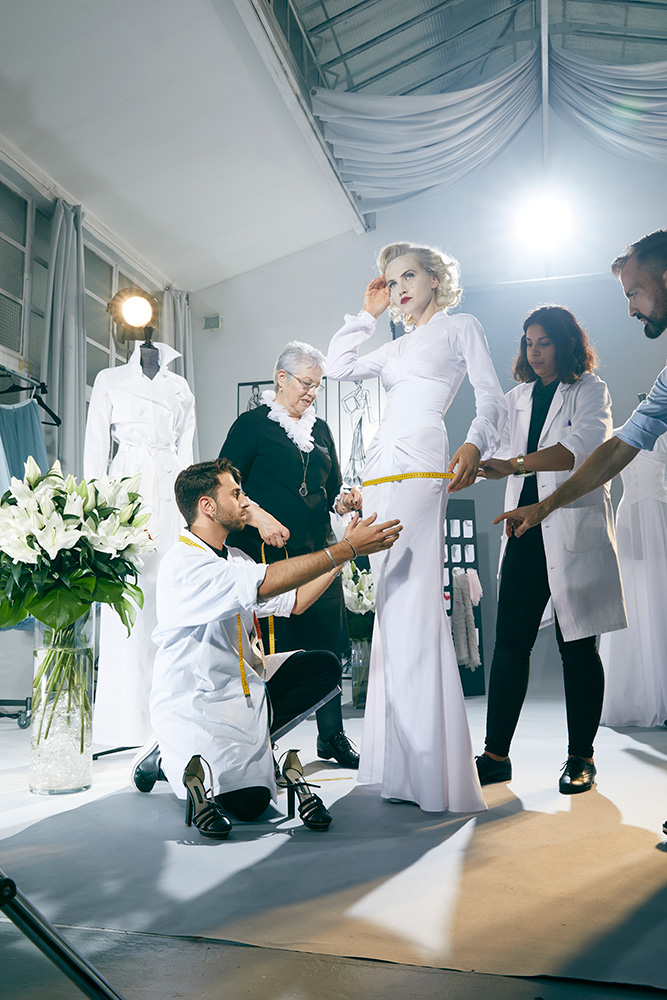
6. The fittings
The client returns to the atelier several times, or the couturier travels to meet her. Each fitting is a dialogue between Julien Fournié, the petites mains and the client. The waist is adjusted, a shoulder line refined, a neckline enhanced. The gown adapts to the body like a second skin.
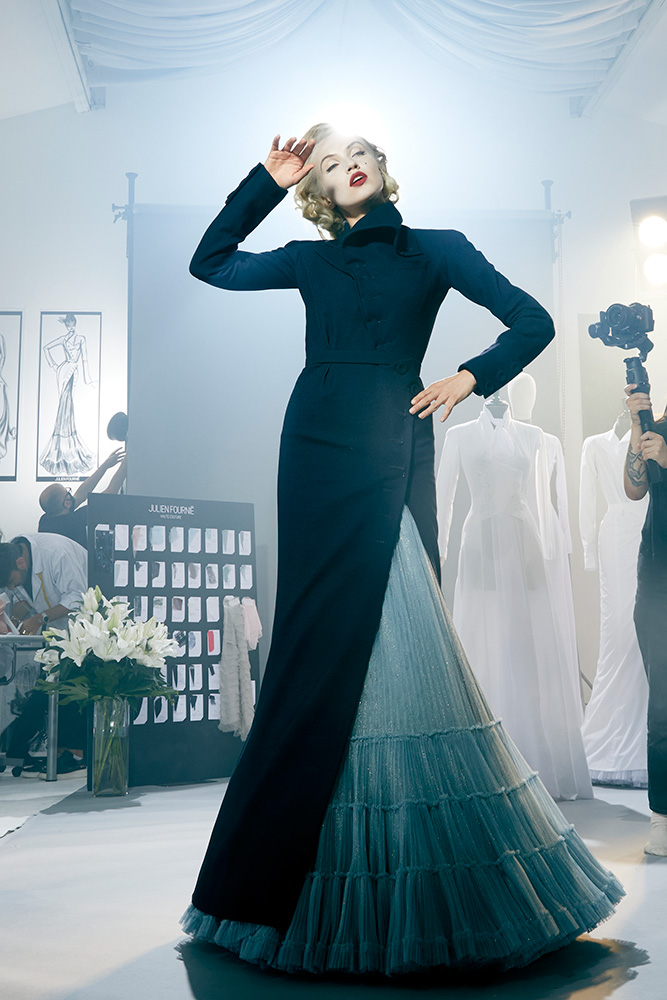
7. The reveal
Finally, the gown is complete. Pressers, feather-workers, embroiderers and seamstresses add the finishing touches. The piece is ready to be unveiled: on a Julien Fournié Paris runway, in the intimacy of a couture salon, or at an exceptional event. It embodies the very essence of haute couture: the unique, the bespoke, the eternal.
FAQ
How long does it take to create a haute couture dress?
A haute couture gown requires between 100 and 400 hours of atelier work, and up to several thousand hours for the most heavily embroidered pieces. From the first sketch to delivery, allow generally one to three months, depending on the complexity of the embroidery and the client’s availability for fittings. Each gown is a unique piece, entirely handmade in the Maison’s Paris atelier.
How many fittings are needed?
A haute couture gown requires on average two to three fittings: the first on the toile to validate volumes and proportions, then one or two fittings on the final fabric to adjust every line to the client’s body. These fittings take place at the Paris atelier or, for international clients, at their home, where the couturier travels to meet them.
What is the “toile” in haute couture?
The toile is the prototype of the gown, made in unbleached cotton before any cutting into the final fabric. It allows the atelier’s petites mains to adjust proportions, test volumes and perfect the cut without risking the precious cloths. The first fitting takes place on the toile — a founding stage of any bespoke creation.
Who can order a haute couture dress from Julien Fournié?
Any client can order a haute couture gown from Maison Julien Fournié, by appointment at the Paris atelier. Wedding dress, evening gown, tuxedo or ceremonial outfit: each piece is created to measure, in direct dialogue with the couturier, wherever the client lives. The first step is to book a private fitting through our contact form.
What is the difference between Haute Couture and ready-to-wear?
Haute Couture refers to unique pieces, handmade to a client’s exact measurements, whereas ready-to-wear is mass-produced in standardised sizes. “Haute Couture” is also a legally protected designation in France: only houses approved by a commission of the Fédération de la Haute Couture et de la Mode may claim it. Maison Julien Fournié has held this official label since January 2017.
How much does a Haute Couture dress cost at Julien Fournié?
A Haute Couture dress is made to order, priced according to the fabrics, the embroidery and the hours of atelier work. Prices generally start at several tens of thousands of euros (or dollar) for an entirely handmade piece. Each project is given a personalised estimate at the first appointment.
Where are Julien Fournié dresses made?
Every dress is handmade in the Maison’s Paris atelier. Each stage, from the toile to the finishing touches, is carried out there by the atelier’s petites mains.
What fabrics are used in a Julien Fournié dress?
The dresses use precious fabrics: silks, chiffons, brocades, laces, jacquard and illusion tulle, with ornaments of beads, crystals, feathers and gold or silver thread. Each fabric is chosen with the client for its texture and its light.
Would you like to know more?
Discover the atelier and book a private fitting to experience a one-of-a-kind dress by Julien Fournié.

More than a fashion brand, Maison Julien Fournié is a luxury experience that transcends trends and seasons. Driven by a commitment to excellence and innovation, Julien Fournié continuously redefines the world of ultra-luxury.
Founded in 2009, the house’s history is woven into its haute couture collections, presented in Paris every January and July during Haute Couture Week. For his debut collection, the young couturier was awarded the Grand Prize for Creativity by the City of Paris in January 2010. By his fourth collection in January 2011, Julien Fournié became a guest member of the official calendar of the Chambre Syndicale de la Haute Couture — a first step towards recognition among the great couturiers.
In January 2017, Maison Julien Fournié was officially classified as Haute Couture. This prestigious label, protected by the French Ministry of Industry, is held by only a handful of houses — currently ten — that unite the highest creativity in design with the finest standards of garment making.
Since its inception, the house has been invited to present its collections at prestigious events worldwide, bringing the couturier’s vision to luxury clients across the globe. In March 2023, a Julien Fournié gown worn by actress Audrey Fleurot entered the Musée Grévin in Paris. In April 2023, the first retrospective of Julien Fournié’s work was held at SCAD Lacoste, in an exhibition entitled Haute Couture, un point c’est tout.
While honouring tradition, Julien Fournié has forged bold partnerships with high-tech leaders such as Apple and Tencent, digitising the creation, design and personalisation of his haute couture pieces. He stands among the rare couturiers to fully master the new digital tools. Clients are no longer mere spectators of the creative process — they have become active participants in the singular experience of creating a garment, wherever they may be.
Since December 2020, Julien Fournié has been developing a line of luxury bags and accessories, initially conceived to offer the iconic pieces seen on the runway — previously reserved for haute couture clients — to a wider audience.